
← Back to Directory

Why Does Foundation Look Different in Different Lighting?

Reading Time: 5 Minutes

Liquid foundation swatches showing different undertones under bright studio lighting

One of the most common experiences in makeup application is achieving what appears to be a perfect foundation match indoors, only to discover it looks dramatically different—often orange, ashy, or distinctly mismatched—when stepping outside into natural daylight. This phenomenon is a direct result of colour theory and how light interacts with pigment.

The Science of Light and Pigment

Colour is not an inherent property of an object; rather, it is the result of how an object reflects light. Cosmetic pigments (such as titanium dioxide for white, and various iron oxides for yellow, red, and black) absorb certain wavelengths of light and reflect others. The colour you perceive depends entirely on the light source illuminating the face.

Types of Lighting

  • Incandescent (Warm) Light: Traditional yellow-toned indoor lighting casts a warm glow. It can neutralise redness in the skin and make overly pink or peach foundations look natural. However, it can mask foundations that are too yellow or orange, causing a shock when viewed in cooler light.
  • Fluorescent (Cool) Light: Often found in office spaces or public bathrooms, fluorescent lighting has a green or blue cast. This light drains warmth, making skin look sallow and emphasising the pink or ashy tones in a foundation that might look perfectly fine elsewhere.
  • Natural Daylight: Overcast daylight provides the most balanced, full-spectrum light. It reveals the true colour of the pigments in relation to the skin's natural undertone. This is why professionals recommend checking a foundation match near a window.

Preventing Lighting Mishaps

When selecting complexion products, the most reliable method is to apply the product to the jawline and observe it in multiple lighting scenarios. Modern cosmetic formulations often include light-diffusing particles (like silica or mica) to help scatter light and create a softer focus, but they cannot entirely override a poor pigment match under harsh lighting.
← Back to Directory

Eyeshadow Blending Fundamentals

Reading Time: 6 Minutes

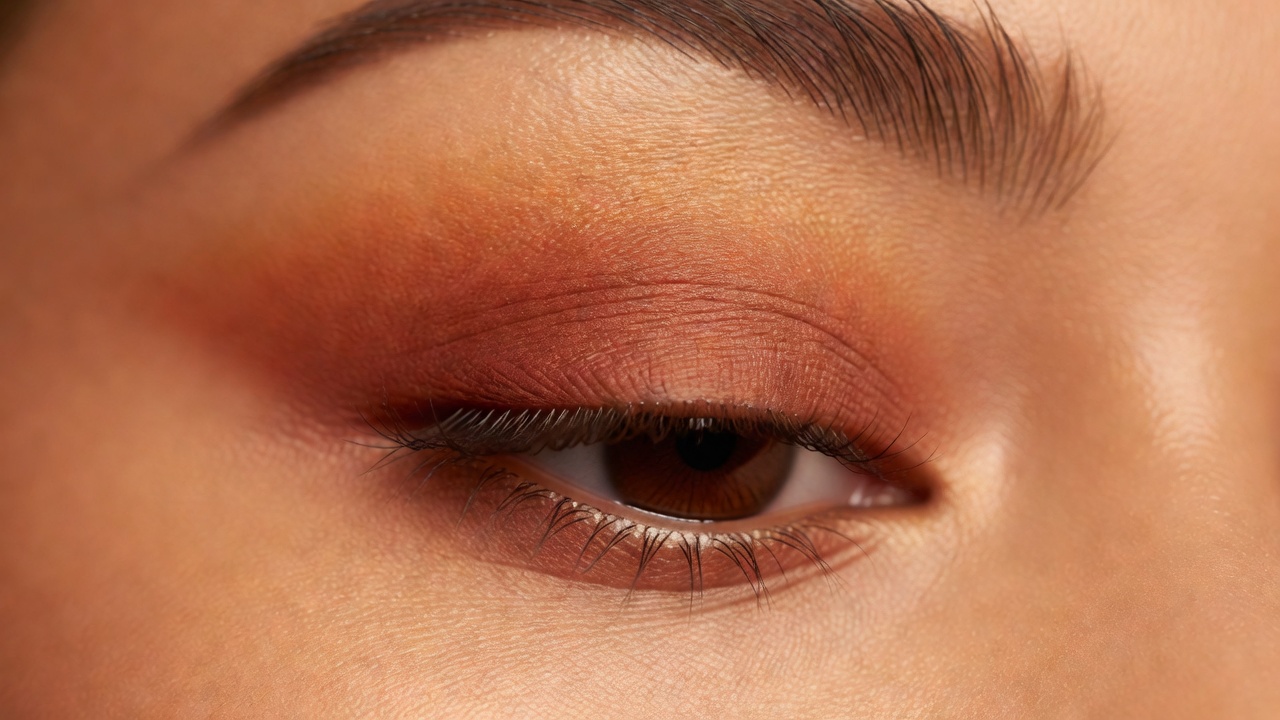
Close up detail of perfectly blended warm toned eyeshadow on a model's eye

Blending is the foundational technique of modern eye makeup application. It refers to the process of seamlessly diffusing the edges of a cosmetic colour, or creating a smooth gradient between two or more different colours, eliminating harsh lines.

Preparation and Priming

Effective blending relies heavily on the surface tension of the eyelid. A bare eyelid often contains natural oils that cause powder pigments to grip unevenly, resulting in patchiness. Applying a dedicated eye primer or a thin layer of concealer set with translucent powder creates a smooth, dry canvas. This allows powder eyeshadows to glide and diffuse smoothly.

The Role of the Transition Shade

A transition shade is typically a matte powder slightly deeper than the natural skin tone. It is applied first, usually in the crease of the eye socket. This shade acts as a buffer zone between the bare skin (or highlight shade) and the darker, more intense colours to follow, making it easier to blend deeper pigments outward without creating abrupt stops.

Tool Selection and Mechanics

  • The Fluffy Brush: A brush with long, loosely packed bristles is essential. When held lightly toward the end of the handle, it applies minimal pressure, allowing the tips of the bristles to gently scatter the pigment particles.
  • Windshield Wiper Motions: Sweeping the brush back and forth in the crease distributes the product broadly.
  • Small Circular Motions: Creating tiny circles with the brush tip specifically diffuses the very edges of where a colour stops, melting it into the adjacent skin or colour.

Patience and light pressure are the most critical factors in blending. It is significantly easier to gradually build colour intensity through thin, blended layers than it is to remove or diffuse a heavy, concentrated application of dark pigment.

Complete Guide Directory

Browse all available educational topics.

Why Does Foundation Look Different in Lighting?

Learn how lighting conditions influence the appearance of complexion products.

Read Guide →

Eyeshadow Blending Fundamentals

Understand transition shades, layering, and creating seamless gradients.

Read Guide →

Blush Placement and Facial Structure

Explain how placement can change the overall appearance of makeup and perceived facial structure.

Read Guide →

Lip Definition and Application

Explain lip liner, lipstick application, preventing feathering, and blending techniques.

Read Guide →